

Chiunque si trovi in Kirghizistan dovrebbe almeno una volta vedere le sue gole: paesaggi pittoreschi mozzafiato, una delle attrazioni naturali più belle del paese.
1. Alamedin:
– Distanza da Bishkek: circa 30 km a sud-est.
– Distretto: distretto di Alamedinsky, regione di Chui.
– Descrizione: è noto per la sua bellezza naturale, una varietà di vegetazione, tra cui foreste di pini. È popolare per l’escursionismo e l’equitazione. La gola di Alamedin è una delle più famose del Kirghizistan. Si trova vicino a Bishkek. L’omonimo fiume attraversa Alamedin, che attraversa la capitale del Kirghizistan. Il modo più comodo per entrare nella gola è attraverso il villaggio di Koi-Tash.
La gola di Alamedin si trova a un’altitudine di 1800-2000 metri sul livello del mare. Ci sono cascate, molti alberi e arbusti, un boschetto di betulle e panorami mozzafiato delle cime delle montagne. Le più famose sono Aitmatov Peak e Kyrgyzstan Peak. Centinaia di animali e uccelli vivono nella gola. In estate, cavalli e pecore pascolano sui prati verdi, che vengono guidati dai pastori. Ci sono anche decine di piante medicinali che crescono qui, che di solito vengono raccolte, essiccate e aggiunte al tè.
2. La gola di Boomsky:
– Distanza da Bishkek: circa 125 km a nord-est.
– Distretto: distretto di Tokmoksky, regione di Chui.
– Descrizione: qui troverete prati di montagna, formazioni rocciose e una flora diversificata. Ottimo per escursioni e gite a cavallo. A 125 chilometri da Bishkek verso Issyk-Kul, la strada conduce alla gola di Boomsky, che si trova nella parte orientale della dorsale kirghisa ed è l’unico corridoio tra Issyk-Kul e Bishkek.
Il nome Boom, che letteralmente significa “spirito maligno”, è stato dato alla gola per il fatto che attraversarla comportava molte difficoltà e prove. Il primo a sperimentare la complessità dell’attraversamento della gola di Boomsky fu il ricercatore russo Pyotr Semenov Tian-Shan nel 1850.
3. Issyk-Ata:
– Distanza da Bishkek: circa 80 km a est.
– Distretto: regione di Issyk-Kul.
– Descrizione: circondato da montagne, questo luogo è famoso per i suoi bellissimi laghi e i meravigliosi sentieri escursionistici. Ci sono due bellissime cascate nella gola, situate a cinque chilometri l’una dall’altra. Si prega di notare che sono necessarie scarpe speciali per andare alle cascate, poiché ci sono pietre molto scivolose. Issyk-Ata è anche circondata da alberi e prati alpini. In estate, i pastori portano qui cavalli e pecore. C’è il fiume Issyk-Ata, che è ricco di trote. La pesca è vietata.
C’è una grande pietra con l’immagine del Buddha a Issyk-Ata, che risale al X secolo. Le persone vanno da lui per chiedere la sua salute. Nel XIX secolo, i residenti locali spruzzavano acqua sulla pietra in segno di gratitudine per la guarigione. Sopra l’immagine del Buddha c’è un’iscrizione in tibetano e sopra di essa c’è un’immagine di un’aquila. Il fatto è che nei secoli XII-XIV, molti residenti di questa zona professavano il buddismo.
4. Canyon di Skazka:
– Distanza da Bishkek: circa 350 km a sud-ovest.
– Distretto: regione di Jalal-Abad.
– Descrizione: Rocce colorate incredibili che creano un’atmosfera magica. Un luogo ideale per escursioni.Il canyon di Skazka, situato sulla sponda meridionale del lago Issyk-Kul, è uno dei luoghi naturali più interessanti e visitati del Kirghizistan. A 120 chilometri da Balykchi e non lontano dal villaggio di Tosor.
Il canyon si trova nella gola omonima ed è famoso per le sue rocce di argilla rossa. Il vento ha levigato qui sculture naturali e favolose per anni. Una delle rocce più famose è la “Muraglia cinese”. È così che è stata soprannominata popolarmente per la sua somiglianza al famoso monumento architettonico della Cina. Camminando attraverso i labirinti del canyon, ti sentirai come se fossi in una vera fiaba. Non c’è da stupirsi che la gola si chiami in questo modo. Le rocce assomigliano a castelli, torri, mostri, giganti, persone e animali. E tutto questo è creato dalla natura, non dalle mani dell’uomo.
5. Canyon di Konorchak:
– Distanza da Bishkek: circa 150 km a sud-est.
– Distretto: distretto di Toktogul, regione di Jalal-Abad.
– Descrizione: formazioni geologiche uniche, tra cui profondi canyon, ideali per le escursioni. I canyon si estendono per 200 km e un’ispezione completa può richiedere molto tempo, ma bastano pochi giorni per ammirare lo scenario impressionante. Hanno nomi poetici sonori: “Grand Canyon”, “Bob” e “Grattacielo”. I canyon di Konorchak si sono formati da uno e mezzo a due milioni di anni fa: il vento e l’acqua alla fine hanno trasformato l’altopiano in gigantesche colonne di pietra, alcune delle quali raggiungono i 400-500 metri di altezza. L’argilla chiara in questi luoghi indica che un tempo le acque del lago Issyk-Kul si estendevano qui.
Una delle attrazioni dei canyon è la “cascata secca” – si tratta dei resti di una cascata che scorreva qui molti anni fa e, come testimonia il folklore locale, emette ogni anno una “lacrima nera”. Un’altra attrazione interessante di questi luoghi è il vulcano spento Segizkhan Shokny, vecchio di 2,5-3 milioni di anni. I suoi pendii sono ricoperti di conchiglie fossilizzate e resti di lava.
6. Kegete:
– Distance from Bishkek: About 230 km to the south.
– District: Suusamyrsky district, Chui region.
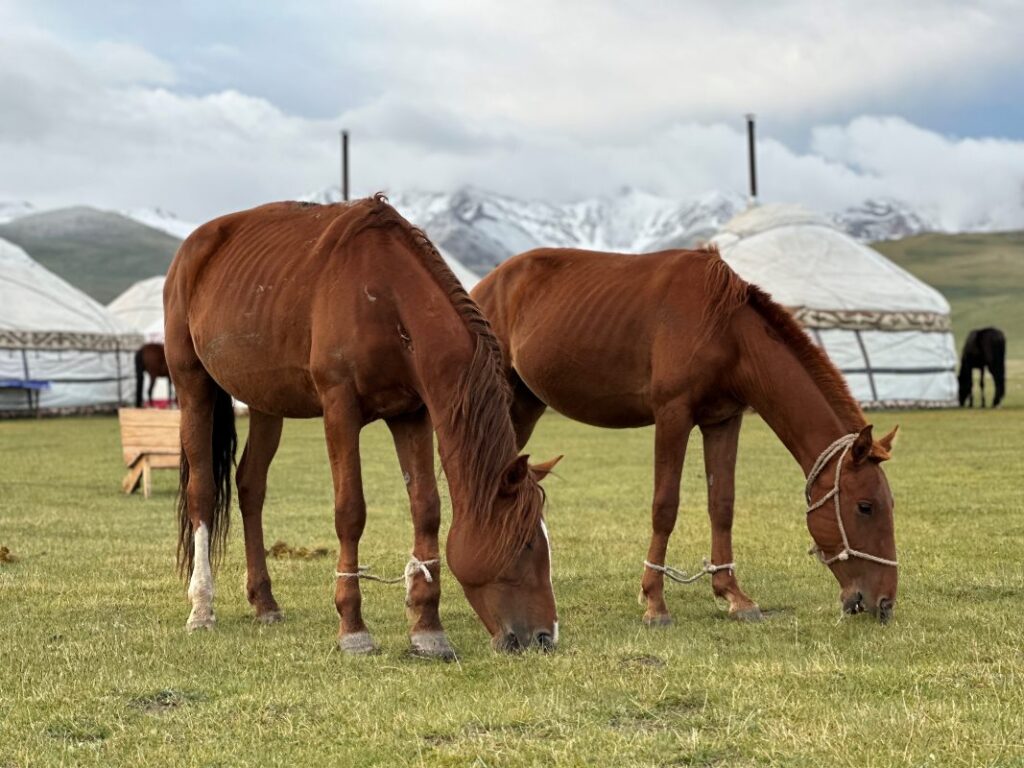
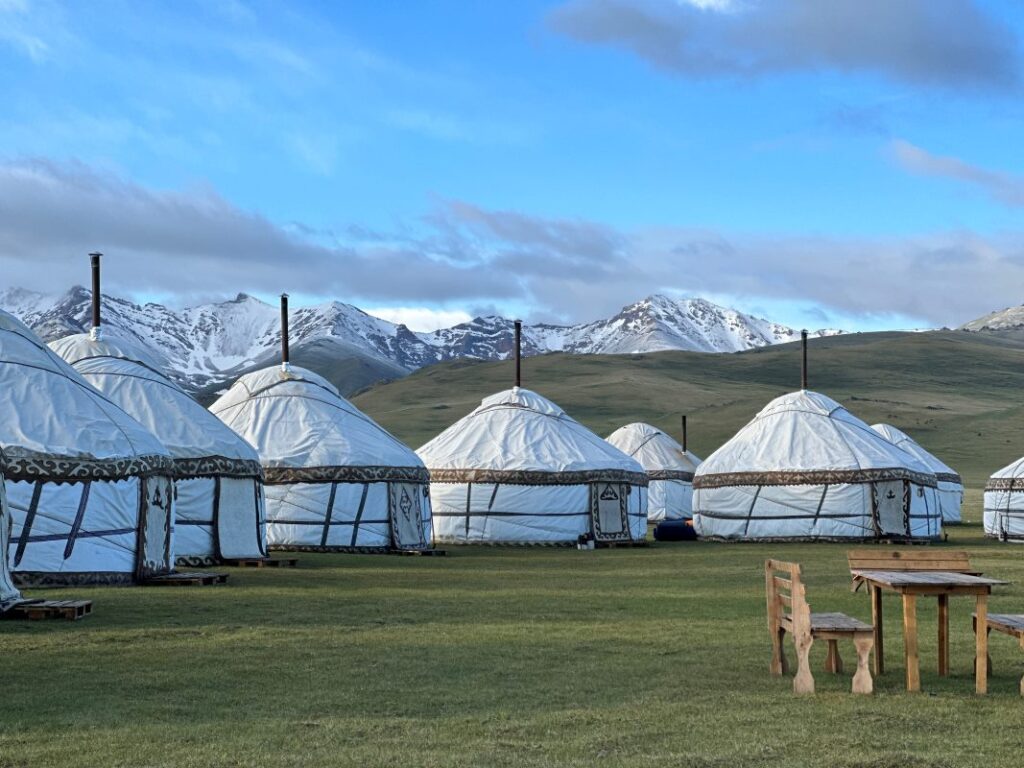
– Description: It offers excellent conditions for horseback riding, hiking and wildlife watching. The length of the gorge is about 27 kilometers. There are many trees here, both coniferous and fruit. Kegety is the most wooded gorge of the Chui Valley. The gorge is also famous for its alpine meadows, medicinal plants and berries. Kegety is home to dozens of species of animals and birds.
There are two other small gorges on the territory of the gorge – At-Jailoo and Kel-Tor, which are part of the Kegets. In the gorge there is a beautiful lake Kel-Tor, the Kegety River, as well as a high-altitude pass, which is located at an altitude of 4000 meters above sea level. One of the waterfalls of the gorge attracts the attention of photo lovers. This waterfall is 30 meters high and looks very picturesque.
7. Semenovskoe and Grigorievskoe gorges:
– Distance from Bishkek: About 70-80 km to the north.
– District: Chui region.
– Description: Alpine meadows, glaciers and scenic views make this place ideal for tourism. The Semenov and Grigoriev Gorges are the largest and most famous gorges on the northern shore of Issyk-Kul, located on the Kungei Ala-Too mountain range. They are located about 30 km from the city of Cholpon Ata in Issyk-Kul region, on the road from Bishkek. The area is dotted with track routes, some of which run through the mountains towards the city of Almaty in Kazakhstan.
A 15-kilometer asphalt road leads from the village of Semenovka, named after the Russian researcher Pyotr Semenov Tien Shan, to the mountains. It runs along the Chon Ak-Suu River, past the Kirchin campsite. The road leads to a summer pasture located at an altitude of 2010 meters above sea level, where Chong Ak-Suu meets Kichi Ak-Suu. The river flows from glaciers about 34 kilometers down to Lake Issyk-Kul through three other small lakes. This pasture or jailoo is the historical site of the congress of Kyrgyz elders.
8. Suusamyr valley:
– Distance from Bishkek: Approximately 120 km to the south.
– District: Suusamyrsky district, Chui region.
– Description: Spacious valleys surrounded by high mountains provide opportunities for various types of tourism. Susamyrskaya (Susamyrskaya) valley is an intermountain depression located at an altitude of 2200 meters above sea level. It is surrounded by mountain peaks, some of which reach a height of 4,500 meters. In ancient times, caravans of the Great Silk Road passed through here. The distance from Bishkek to the Suusamyr Valley is 160 kilometers.
In fact, it is a green plain that stretches for 155 kilometers, and in some places reaches 40 kilometers wide. There are more than 300 species of plants growing in the valley, including medicinal ones. At the same time, there are practically no trees. Some plant species are listed in the Red Book. The red Book snow leopard lives in Suusamyr.Two mountain rivers flow here – Suusamyr and Western Karakol, and there is also a mountain spring.
9. Ferghana Valley:
– Distance from Bishkek: Approximately 450 km to the southeast.
– District: Batken region.
– Description: A culturally and historically rich place with beautiful nature. It is recommended for hiking and exploring the local culture. The Ferghana Valley is an important corner of the world, located on trade routes between empires. The Naryn and Kara Darya rivers merge in the center of the Ferghana Valley, forming the Syr Darya, which irrigates the valley and supports agriculture. Moving through this region is complicated by the overlapping borders and enclaves of Kyrgyzstan, Uzbekistan and Tajikistan, which sometimes divide roads and routes in half.
The city of Khujand, located on the territory of modern Tajikistan, was founded in 329 BC by Alexander the Great, who made Fergana the Far Eastern border of his empire. This area has long been famous for the special breed of Ferghana horses bred here. They were called heavenly horses and appreciated for their speed and strength, China participated more than other countries in the purchase and sale of these horses. The Ferghana Valley served as a vibrant and diverse center of trade on caravan routes across Eurasia.
10. Chunkurchak:
– Distance from Bishkek: Approximately 120 km to the north.
– District: Chui region.
– Description: It is known for its mountain landscapes and tourist routes suitable for various types of tourism. Chunkurchak Gorge is located at an altitude of 2,400 meters above sea level. “chunkurchak” is translated from Kyrgyz as “hollow”.
Chunkurchak is considered one of the most beautiful gorges in Kyrgyzstan. Here you can observe a colorful symbiosis of snowy mountain peaks, green alpine meadows, coniferous forests and reddish soil.
At the entrance to Chunkurchak, stunning panoramas open up, which are the hallmark of the Chui Valley.